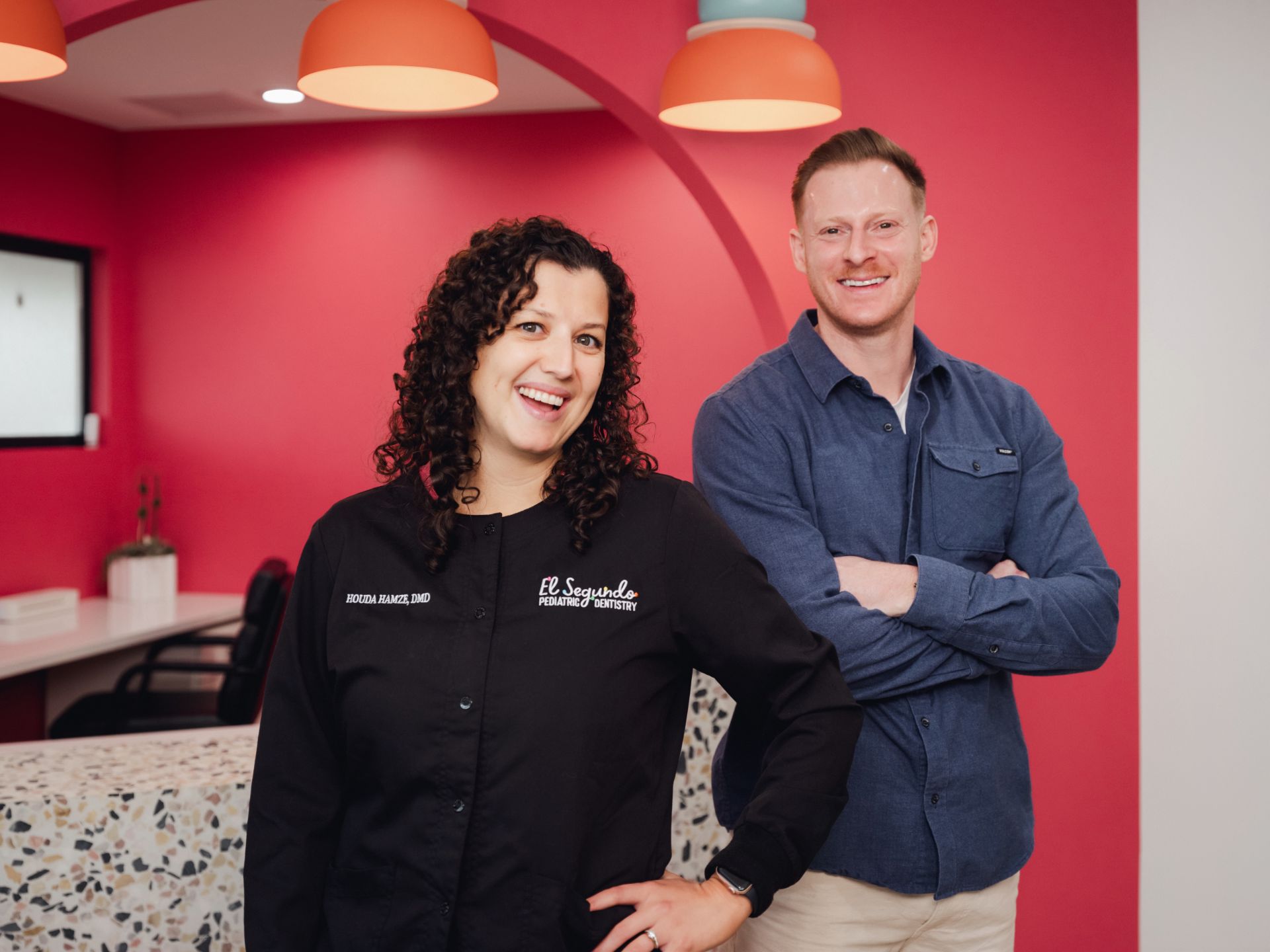

Emergency Pediatric Dentist in El Segundo, CA

Not sure if this is an emergency?
Call us now at (424) 499-0019. We'll tell you whether to come in today and what to do in the meantime.
You can also visit us at 502 Center Street, El Segundo, CA 90245 or reach us through our contact page.
Emergency Pediatric Dentist in El Segundo, CA
One minute your child is fine. The next you're looking at a chipped front tooth, a baby tooth on the sidewalk, or a child who can't stop crying and can't tell you where it hurts. Dr. Hamze and the team at El Segundo Pediatric Dentistry keep room in the schedule for exactly these days, so your child can be seen quickly by people who work with little mouths all day long.
If you're in the middle of one of these moments right now, call us at (424) 499-0019. We'll help you sort out whether your child needs to be seen today, and we'll tell you what to do in the meantime. If your child is calm and the injury looks minor, you can also request a visit online.
Quick Takeaways
- Call first, even if you're unsure. A five-minute conversation can tell you whether this is a today problem or a this-week problem.
- Time matters most for knocked-out and displaced permanent teeth. Keep a knocked-out permanent tooth moist in milk and get moving to our emergency dental care team.
- Ask what the plan is, and why. You should leave understanding the reasoning behind every recommendation.
- Sedation is an option, not a default. Sedation dentistry gets talked through with you before anything is scheduled.
- Costs get reviewed before treatment starts. You'll hear the numbers before we begin, not after.
When to Call Us Right Away
Some things need attention within the hour. Others can wait until tomorrow morning without any harm done. Here's how we sort it.
Call us immediately if you see:
- A knocked-out permanent tooth. This is the most time-sensitive dental injury there is.
- A tooth pushed loose, sideways, or up into the gum after a fall.
- Severe or throbbing pain that isn't easing up.
- Swelling in the gum, jaw, or face, which can point to an infection.
- A broken tooth with pain, or a sharp edge slicing the tongue or cheek.
- Bleeding in the mouth that won't stop with gentle pressure.
Urgent, but usually not same-day:
- A small, smooth chip with no pain or sensitivity. A simple bonding repair can smooth it out at a regular visit.
- A hairline crack your child doesn't feel.
- A wiggly baby tooth that's clearly on its way out on its own.
- Food stuck between teeth that flossing hasn't solved. Bring it up at your next checkup and cleaning.
When you can't tell which list you're on, we'd rather talk it through with you. If your child is anxious about treatment once we've seen them, we'll walk you through every comfort option first.
What Happens When You Get Here

Emergency visits move at a different pace than checkups, but the approach doesn't change: nothing gets done to your child without an explanation first.
1. We calm things down
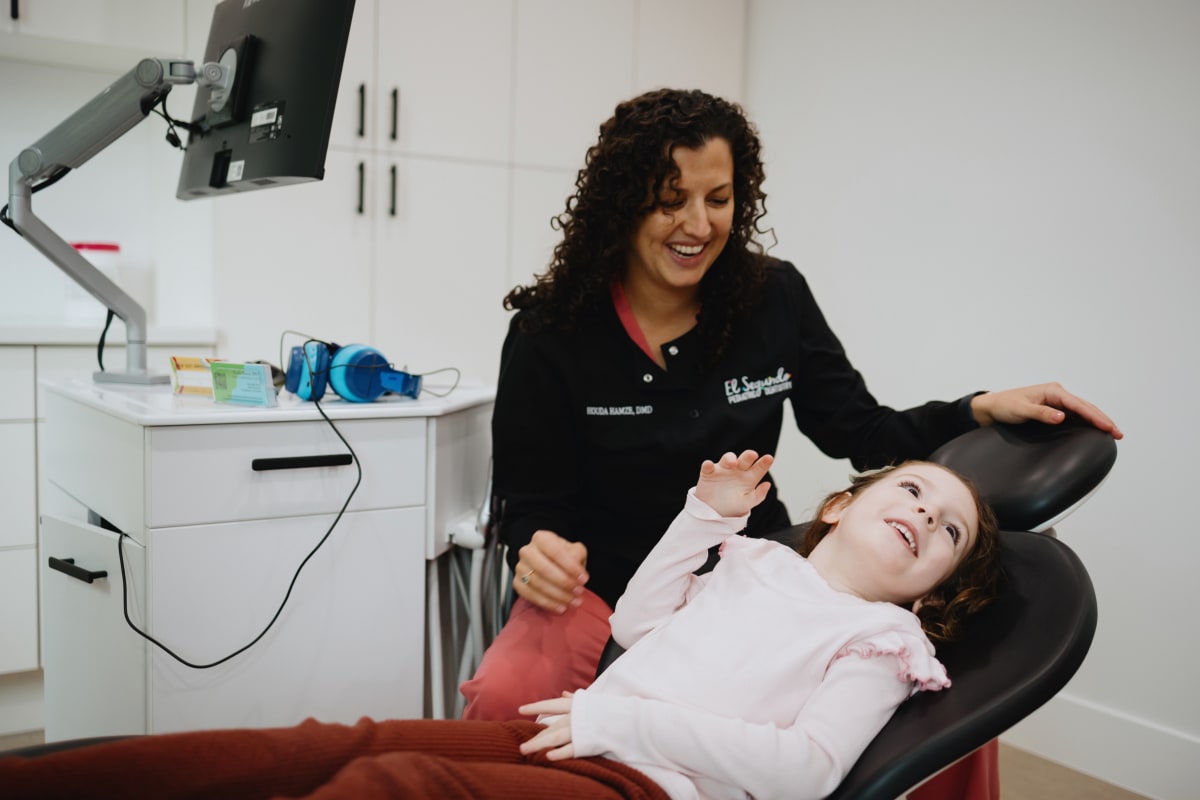
Kids in pain are scared kids, and scared kids don't open their mouths. Before any instrument comes out, we get your child settled, introduce ourselves, and let them look around. This is a room full of color, not a cold clinical space.
2. We look, and we take images if we need them
A gentle exam of the area, plus digital X-rays when the injury involves a root, a nerve, or a permanent tooth developing under a baby tooth. Digital images use low radiation and come up on screen right away, so we can show you what we're looking at.
3. We explain what we found, in plain words
What's damaged, what it means for the tooth, and what happens if we do nothing. If there's a wait-and-watch option, you'll hear about that too. You get every option, not just the one at the top of the list.
4. We treat the problem
That might mean smoothing and bonding a chipped tooth, a filling, root canal treatment on a baby tooth, an extraction, or repositioning and stabilizing a tooth knocked out of place. Comfort options range from nitrous oxide (the "laughing gas" most kids find silly and pleasant) up to IV sedation, administered by a pediatric anesthesiologist, for extensive work or very anxious little ones.
5. We send you home knowing what to watch for
Instructions for the next few days: what your child can eat, what pain is normal, what pain isn't, and when we want to see them again.
Why Same-Day Emergency Care Makes a Difference
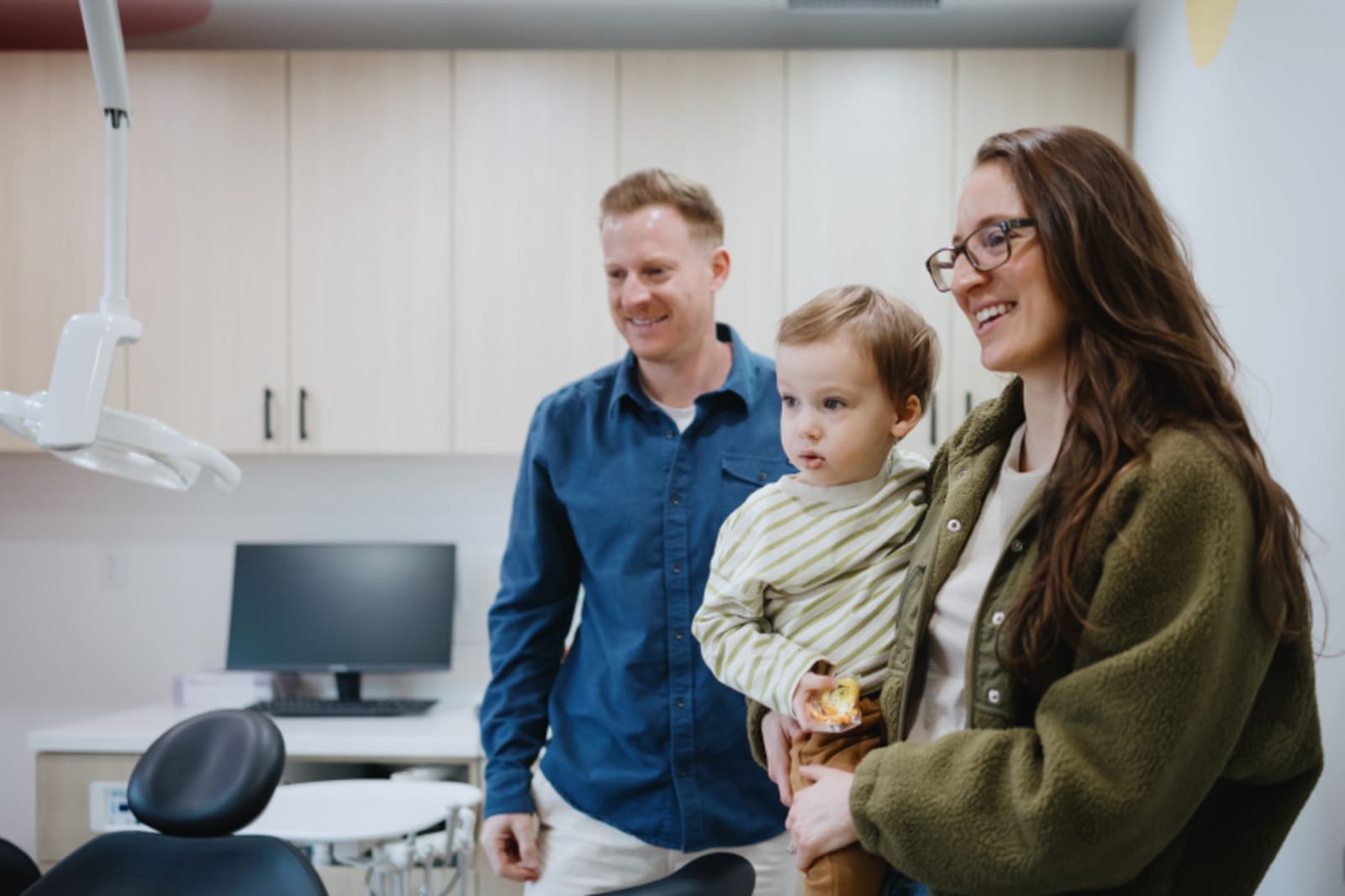
We hold slots open for this reason:
- Better odds of saving the tooth. Knocked-out and displaced permanent teeth have a treatment window measured in minutes and hours, not days.
- Pain stops sooner. A child in dental pain isn't eating, sleeping, or concentrating at school. Neither are you.
- Infections stay contained. Dental abscesses spread, and swelling that started in a gum can become a much bigger problem.
- The permanent tooth underneath stays protected. Trauma to a baby tooth can affect the adult tooth forming above or below it, so we take low-radiation digital x-rays and monitor even when the baby tooth looks fine.
- You skip the ER wait. Hospital emergency rooms can manage pain and rule out bigger injuries, but most aren't equipped to actually treat the tooth.
- The scary visit stays small. Handled gently and quickly, an emergency doesn't have to turn into a lifelong fear of dentists. When a child needs extra help staying comfortable, sedation options are available.
After-Hours Emergency Calls
If your child has a dental emergency outside our regular office hours, you can still call us at (424) 499-0019. Your call will connect to our emergency line, where you'll be able to speak directly with the doctor.
We'll help you understand what to do next, whether your child needs immediate attention or can safely wait until the office reopens.
Which Kids Belong Here
We treat infants through teens. Toddlers who face-planted off the coffee table, kindergarteners with a swollen cheek, athletes who took an elbow to the mouth, kids who've never been to a dentist at all, and kids who have been and hated it.
Children with sensory sensitivities, neurodivergence, or a rough dental history often do best when they're not rushed. That's the kind of visit we're set up for, whether it's a routine checkup and cleaning or a longer appointment with sedation options.
If your child has a suspected broken jaw, a head injury, loss of consciousness, uncontrolled bleeding, or swelling affecting breathing or swallowing, go to the emergency room. For everything else, we're here to help.
Timeline: From Phone Call to Follow-Up
The phone call
Usually a few minutes. We'll ask what happened, how old your child is, whether it's a baby or permanent tooth, and whether there's swelling or bleeding. Then we'll tell you when to come in and what to do until then. We're open Monday through Friday, 8:00 to 5:00.
The emergency visit
Plan on roughly an hour, sometimes longer if treatment happens the same day. Simple repairs like bonding a chip or a small filling are often finished in that single visit.
Definitive treatment
Some injuries get stabilized first and fully treated at a second appointment, especially when your child is exhausted or when extensive work is better done under sedation. Dr. Hamze will always tell you which path we're on and why.
Follow-up
Injured permanent teeth get rechecked over the following weeks and months, because a nerve can take time to show whether it survived the hit. These visits are quick, and they matter. If your child is due for a regular checkup and cleaning, we can often line the two up.
Before the Visit and After
What to do before you arrive
- Knocked-out permanent tooth: pick it up by the crown, not the root. Rinse gently with milk or water if it's dirty, store it in milk, and come straight in.
- Knocked-out baby tooth: don't put it back. Bring it if you find it, and use light pressure from clean gauze to control bleeding.
- Toothache: rinse with warm salt water, floss gently in case something's wedged, and give the age- and weight-appropriate dose of children's pain reliever. Skip aspirin.
- Swelling: a cold compress on the outside of the cheek, 15 minutes on and off.
- Bring with you: insurance information, your child's medications and medical history, and a comfort item. A stuffed animal does more good than you'd think.
After treatment
- Soft foods for a day or two, and nothing hot while your child is still numb. Numb lips and cheeks get chewed without kids noticing.
- Follow the pain relief plan we give you rather than guessing at doses.
- Keep brushing gently around the treated area.
- No straws or hard foods after an extraction.
- Once the urgent part is handled, we'll schedule a follow-up to make sure your child is healing well and get them back on a regular care schedule. If this visit was hard, we'll talk through comfort options (including sedation) before anything is scheduled next time.
Cost and Payment For Emergency Pediatric Dental Visits
An emergency visit doesn't have a single flat price, because the cost depends on what we find: an exam and X-ray is a different picture than an extraction with sedation. You'll hear the numbers before we start, not after.
We'll review your dental benefits with you and explain what's likely covered, what isn't, and what your share looks like.
If the urgent part can happen now and the rest can wait for a timeline that works for your family, we'll say so. Have your insurance information handy when you come in, and we'll go through it together before anything starts.
Why Families Around the South Bay Come to Us
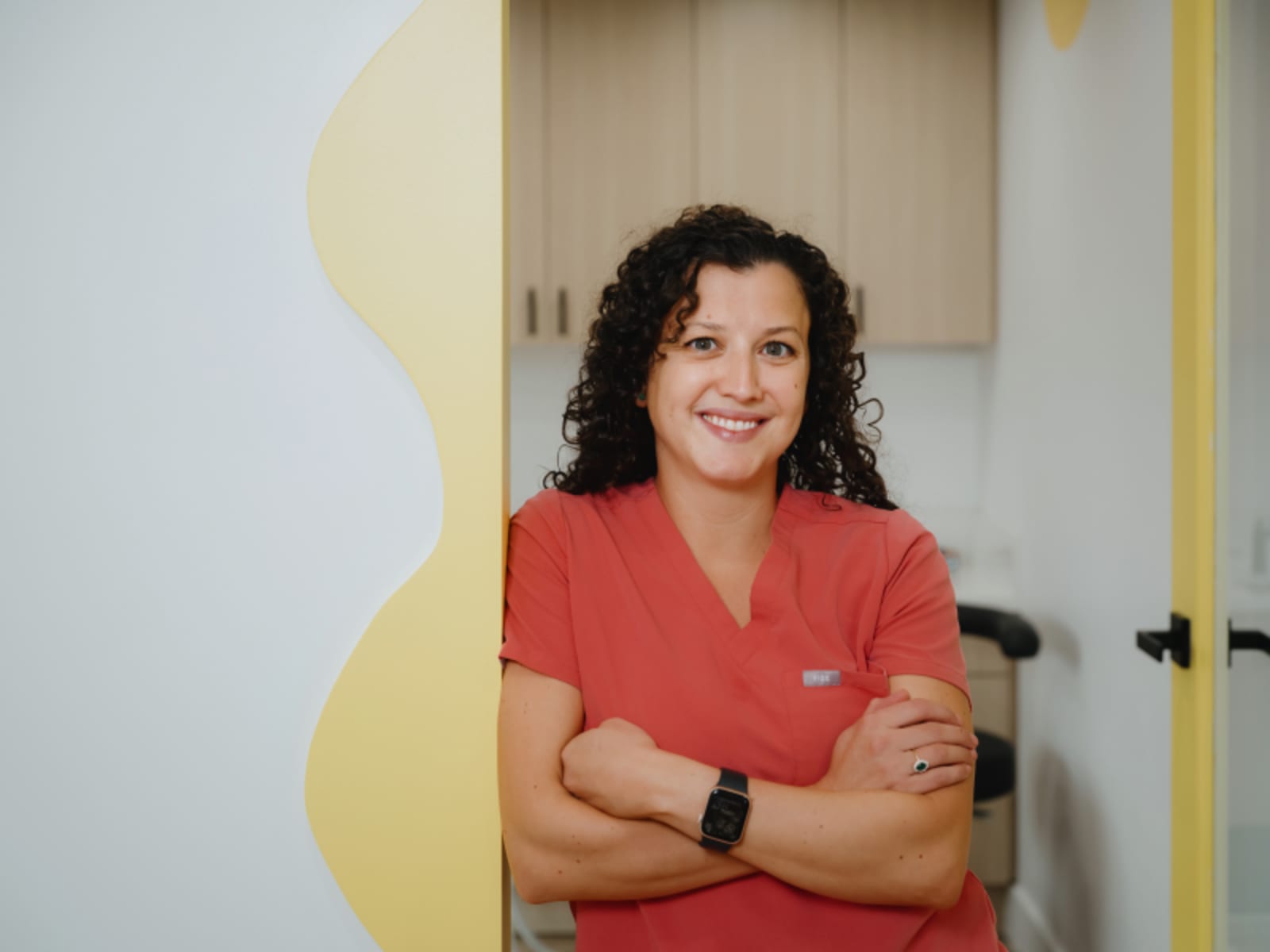
Dr. Houda Hamze is a board-certified pediatric dentist. She trained at Tufts University School of Dental Medicine and completed a two-year pediatric residency at NYU Langone, then spent three years in private practice and with underserved communities before opening this office. She's also a mom of four, and she treats every child at the practice with the care she'd give her own.
What that means during an emergency:
- Quality over volume. When your child needs extra time, there's extra time.
- Real explanations, every time. We walk through the images with you, and second opinions are welcome without any awkwardness.
- Comfort options that scale. A frightened four-year-old and a stoic twelve-year-old can each get what they actually need, from nitrous oxide to IV sedation administered by a pediatric anesthesiologist.
- Connected to the people you already trust. We work closely with pediatricians, lactation consultants, and myofunctional therapists across El Segundo and the South Bay, the same relationships that make us the practice families turn to for lip and tongue tie treatment.
- An office kids don't dread. Funky, colorful, loud in the good way. Even on a bad day, we want your child to leave a little proud of themselves.
Frequently Asked Questions
My child just knocked out a tooth. What do I do this second?
If it's a permanent tooth, handle it by the crown, keep it moist in milk, and get here fast. If it's a baby tooth, don't reinsert it; that can damage the permanent tooth developing underneath. Either way, we want to check the socket, the gum, and the tooth still forming above it. Head straight to our office so we can assess the socket, the gum, and the developing tooth.
Is a chipped baby tooth actually an emergency?
Sometimes. A small chip with smooth edges and no pain can usually wait a day or two. A jagged edge, sensitivity to air or cold, pink or red showing at the break, or pain when biting means we want to see your child today. Call and describe it; we can usually tell over the phone.
Should we go to the ER instead?
Go to the ER for suspected jaw fractures, head injuries, uncontrolled bleeding, or swelling that affects breathing or swallowing. For the tooth itself, a pediatric dental office is the right place, since most ERs can manage pain but can't repair or replant a tooth.
Will my child need sedation to get this fixed?
Often not. Plenty of emergency treatment happens with numbing alone, or with nitrous oxide. For very young children, extensive treatment, or kids who genuinely can't get through it awake, we'll discuss IV sedation, administered by a pediatric anesthesiologist, including how it works, who monitors your child, and the recovery. You decide, with the full picture in front of you.
What if this all started because we skipped dental visits?
Then we start today and move forward. Guilt isn't useful to your child, and it isn't something you'll hear from us. Plenty of families find their way to a pediatric dentist because of an emergency, and that's a perfectly good beginning.
My child has sensory needs and struggles with dental visits. Can you still help in an emergency?
Yes. Tell us about your child when you call, what sets them off, what soothes them, what's worked and what hasn't. Dr. Hamze and our team will shape the visit around that instead of expecting your child to adapt to us.
We're Here for the Bad Days Too
Dental emergencies are exhausting, and they never happen at a convenient hour. You don't have to know what to do next (that's our part). Tell us what happened and we'll take it from there, whether that means coming in this afternoon or watching a small chip until the next checkup.
Call (424) 499-0019 to reach Dr. Hamze and our team at 502 Center Street in El Segundo. We'll be patient with your child, honest with you, and we'll walk you through every option (including sedation) before anything is scheduled.
We can’t wait to meet you!
Call 424-499-0019 or request an appointment online to set up your first visit. We’ll be in touch soon.